
Hybrid basics · Kerikeri, Northland
Do You Need to Plug In a Hybrid?
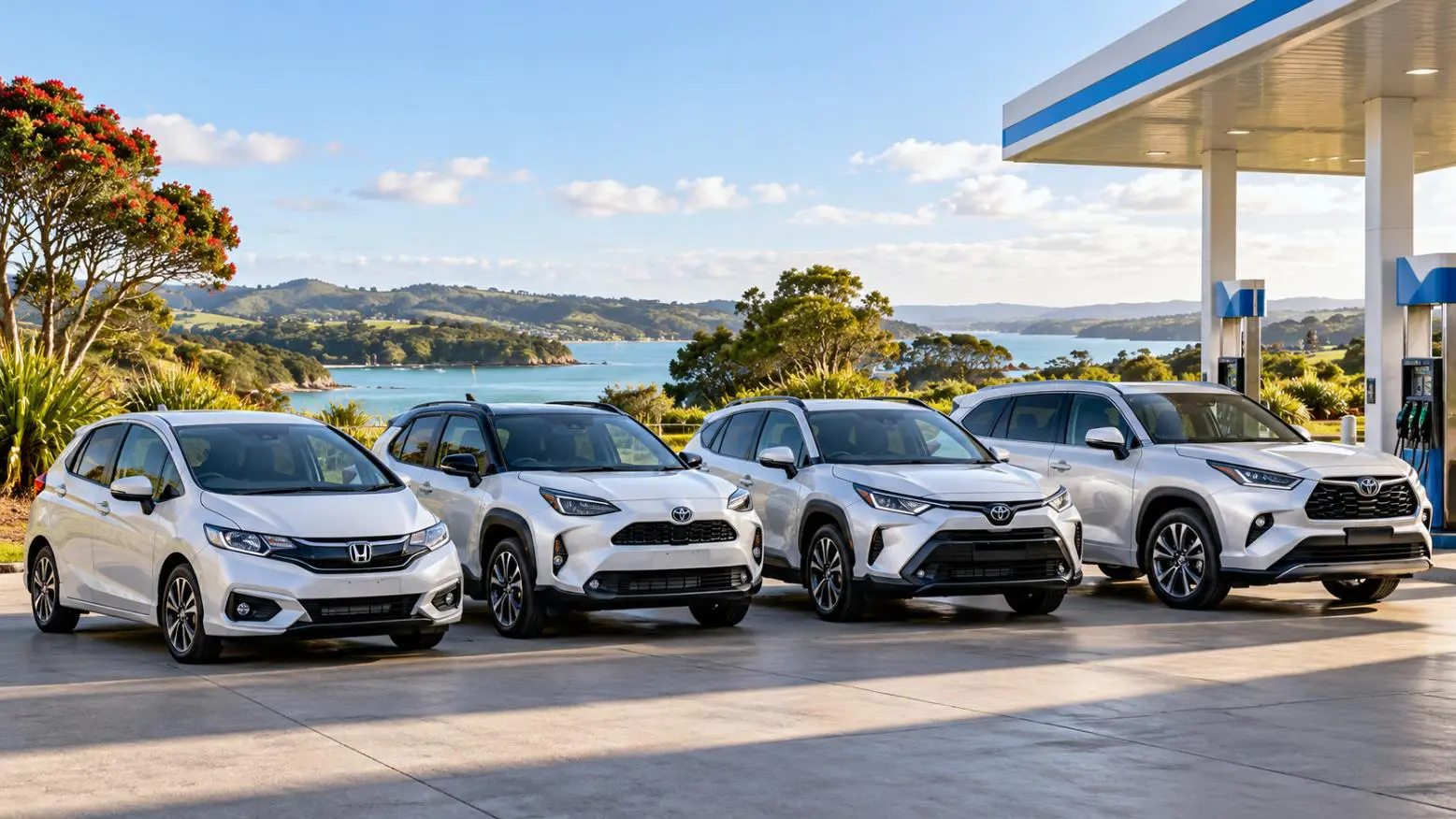
No — the self-charging hybrid cars available from Blue Star don’t need to be plugged in. Simply fill up with petrol and drive as usual.
You can leave charging cables and charging-stop planning out of your Northland itinerary. The car manages its hybrid battery while you concentrate on the road.
How do self-charging hybrid cars work?
A conventional hybrid combines a petrol engine, an electric motor and a rechargeable battery. Depending on the model and conditions, the motor assists the engine or moves the car for short periods. The system chooses how to use those energy sources automatically.
You still need petrol. “Self-charging” describes how the battery is replenished; it does not mean the car creates free energy or can keep travelling with an empty fuel tank. Toyota explains that its conventional hybrids recharge using the engine and energy recovered when slowing down. Read Toyota NZ’s hybrid explanation.
Two ways the battery gets charged
- Through the engine: the system can use engine power to generate electricity when needed.
- Through regenerative braking: when slowing down, the motor can work as a generator, capturing some energy that would otherwise become heat.
The balance changes as you drive. It is normal for the engine to start and stop, and for the dashboard’s energy-flow display to show power moving in different directions. Toyota’s hybrid system manages the combination of engine and electric power automatically; the details depend on the model supplied.
Movement at the wheels→② Motor generates
Some energy recovered→③ Battery stores
Ready to assist again
This is a simplified energy-flow illustration. Regeneration cannot recover all the energy used to move the vehicle and does not replace normal braking.

Hybrid vs plug-in hybrid vs electric
The word “hybrid” covers more than one kind of car. Check the actual model rather than assuming every petrol-and-electric vehicle has the same charging needs.
| Vehicle type | Plug it in? | Petrol? | Trip planning |
|---|---|---|---|
| Conventional hybrid (HEV) | No external charging | Yes | Plan normal fuel stops |
| Plug-in hybrid (PHEV) | Charge externally to make use of its plug-in electric range | Usually yes | Consider both charging and fuel |
| Battery electric (BEV) | Yes | No | Plan suitable charging stops |
Blue Star’s self-charging hybrid fleet is the first type in the table. Plug-in hybrids have a larger battery designed for external charging as well as hybrid operation. For the conventional hybrids Blue Star offers, Toyota NZ explains how its hybrid system works without plugging in. You can also explore our Toyota-focused hybrid guide and images.
Why choose a Blue Star hybrid?
Enjoy Northland without planning charging stops
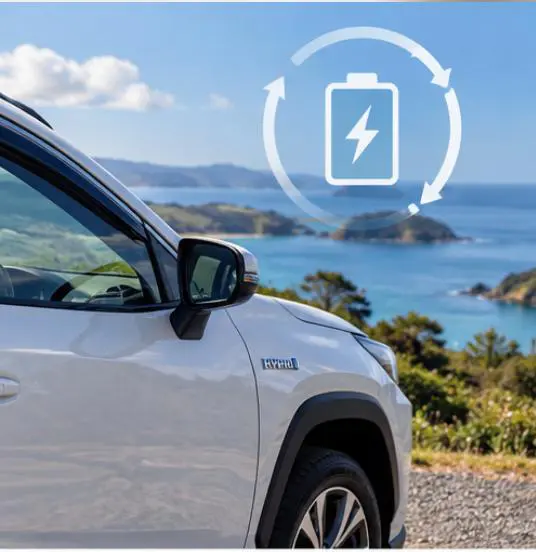
With a Blue Star self-charging hybrid, you can spend more time travelling and less time thinking about where to plug in. Fill up with petrol as usual, enjoy the potential for low fuel consumption and let the car manage its hybrid battery.
Check cars & availabilityWhat does driving a hybrid feel like?
For most visitors, the first few minutes feel much like driving an automatic petrol car. Allow time at handover to find the gear selector, parking brake, lights and demister. Ask Blue Star to explain any unfamiliar dashboard indicators before setting off.
- Check that the vehicle is ready. On many hybrids a READY indicator, rather than engine noise, confirms that you can drive.
- Accelerate and brake smoothly. You do not need special techniques to make the car charge.
- Expect the engine to come on when needed. Hills, heating, acceleration and battery conditions can change when it runs.
- Switch the car off when parking. A quiet engine is not proof that the vehicle is off. Never leave a powered-on hybrid in an enclosed garage.
Some hybrids can move very quietly at low speed. Keep an eye out for pedestrians in car parks and driveways. Treat EV mode or other drive-mode buttons as optional features to understand at handover, not as a target you must use throughout the trip.
Do not coast in neutral to try to save petrol, and do not experiment with unfamiliar downhill modes. Follow the vehicle instructions and ask about the model supplied.
Why a self-charging hybrid suits Northland
A Kerikeri stay often mixes short trips around town with longer drives to coastal villages. With a self-charging hybrid, your accommodation does not need a charge point and you can stop where the day takes you.
That flexibility is useful on our Northland scenic-drive routes, where sightseeing time matters as much as distance. You still need to plan petrol stops before remote stretches, check conditions and leave enough daylight for the return.
Choose a vehicle for your people and luggage first. A compact can suit a couple travelling light; an SUV may be more practical for a family. Compare the Blue Star hybrid car range, and use our hybrid fuel-consumption guide to understand the published figures without expecting guaranteed savings.
Your questions answered
Do hybrid cars need charging?
Conventional self-charging hybrids recharge their own traction battery while driving and slowing down. You do not plug them in. Plug-in hybrids and fully electric cars have different charging arrangements.
What petrol should I put in my rental hybrid?
Use the fuel grade specified for the particular vehicle. Check the fuel-flap label and handover instructions, and ask Blue Star if you are unsure. Do not assume every model uses the same grade.
Can a self-charging hybrid run out of battery?
The system manages the traction battery automatically during normal use. It still needs petrol, and a fault or a flat 12-volt battery can prevent starting. Contact Blue Star or the assistance service supplied with your booking if a warning appears.
How long does the hybrid battery last?
Battery life depends on the vehicle, age, use and maintenance. There is no single lifespan or warranty figure that applies to every rental model. As a renter, you do not need to arrange traction-battery charging or maintenance.
How far can I drive on one tank?
Range depends on the supplied model, usable fuel, terrain, load and driving conditions. Check the vehicle’s fuel gauge and plan fuel stops; a dashboard range estimate is not a guarantee.
Do I need previous hybrid experience to hire one?
You do not need previous hybrid-driving experience, but the usual licence and rental requirements apply. Allow time for Blue Star’s vehicle handover and read the rental FAQs.
More about booking and driving with us: Blue Star rental FAQs.
Keep exploring Northland
Try a Hybrid on Your Next Northland Adventure
Compare our hybrid fleet and arrange Kerikeri Airport collection for your travel dates. We can explain the supplied vehicle before you set off.
Choose your dates belowAvailability, pickup arrangements and rental conditions are confirmed with your booking.
Check cars & availability
Choose your collection point and travel dates to see the available cars.
Open the booking page if you prefer.
Guide checked 29 October 2026. Travel conditions, operator arrangements and fleet listings can change. Follow current official advice.