
Fuel planning · Real Blue Star fleet
How Much Fuel Does a Hybrid Use in New Zealand?
Blue Star’s published hybrid fuel-economy figures run from 3.3 to 5.6 L/100 km on its range page. That means a useful starting point for petrol planning, rather than a promise about what you will achieve on the road.
This hybrid car fuel consumption NZ guide compares the fleet and helps you calculate a realistic travel budget.
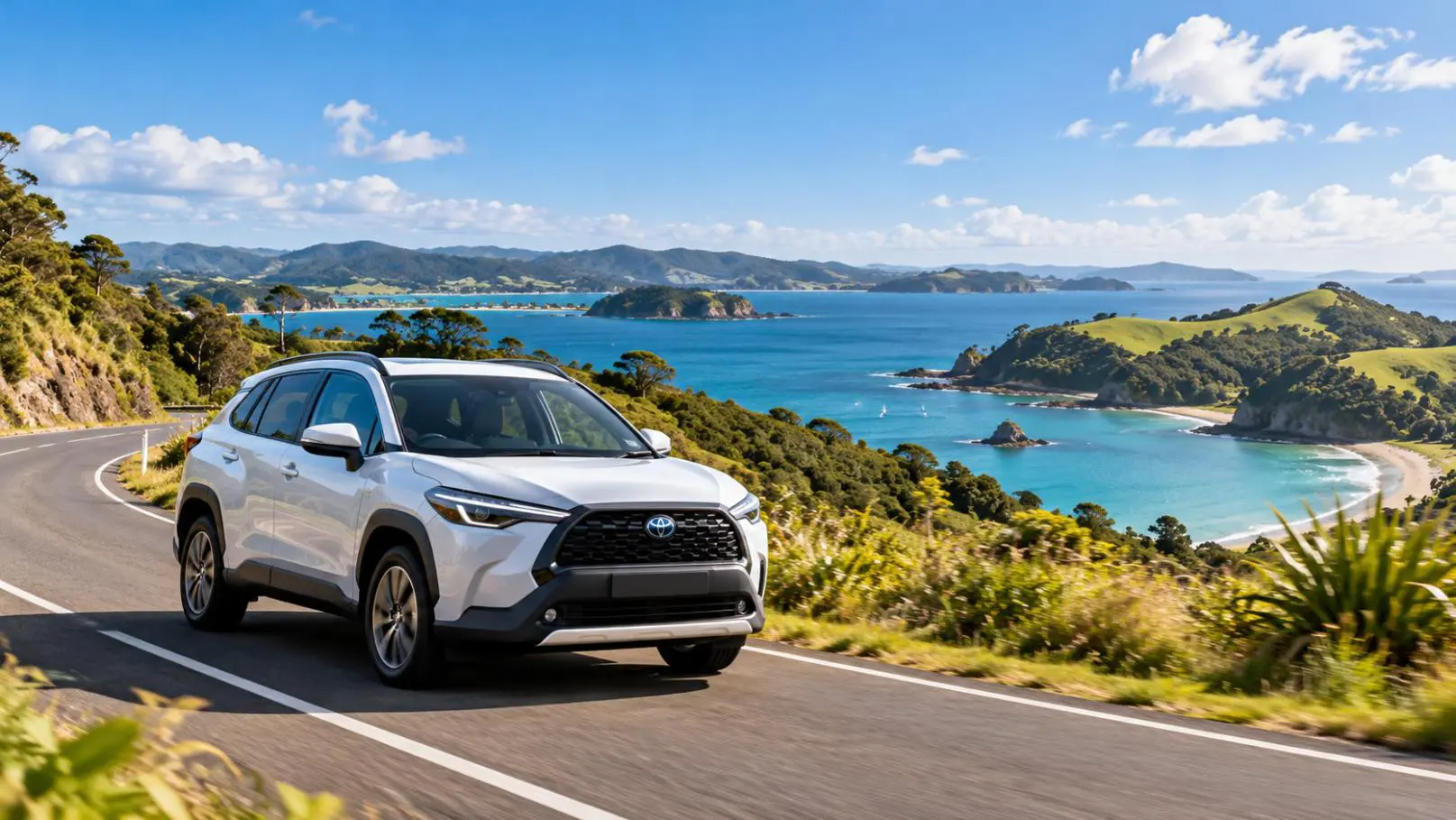
How much petrol does a hybrid typically use?
There is no single fuel figure for every hybrid. Size, engine, model year and the test cycle all matter. For a useful local comparison, Blue Star’s current range page lists figures from 3.3 L/100 km for compact categories to 5.6 L/100 km for the seven-seat Highlander.
L/100 km means litres used to travel 100 kilometres. A lower number means less fuel for the same distance. At a planning petrol price of NZ$3.50 per litre, 4.1 L/100 km would cost NZ$14.35 in petrol per 100 km. Adjust the price to what you expect to pay at the pump.
Use these listings as planning references. Blue Star’s pages do not establish a common test cycle or the exact model year and specification of every supplied car, so this is not a controlled comparison. Your trip may use more fuel.
Why hybrids can use less fuel
A hybrid can recover some energy while slowing down and reuse it to assist propulsion. Its engine and motor also share the work according to driving conditions. For a simple explanation of charging, see Do you need to plug in a hybrid? and Toyota NZ’s overview.
That can be useful when a holiday includes town traffic and changing speeds. It does not mean every hybrid beats every petrol-only vehicle on every journey. Compare vehicles of similar size and use the complete rental cost, luggage needs and comfort requirements when deciding.
Why your Northland result may differ
- Hills and bends: repeated climbs and acceleration change consumption.
- Short journeys: cold starts and cabin heating can affect the average.
- Load: passengers, luggage and accessories add weight.
- Speed and weather: higher speeds, headwinds and wet conditions can increase demand.
- Driving style: smooth inputs and looking ahead generally make a better starting point than trying to keep the engine off.

Why choose a Blue Star hybrid?
Put your fuel budget towards the holiday
Choose a Blue Star self-charging hybrid that fits your group and your travel budget. There are no plug-in charging stops to organise, and economical fuel use can leave more room in the budget for Northland experiences. Actual consumption depends on the car and the conditions.
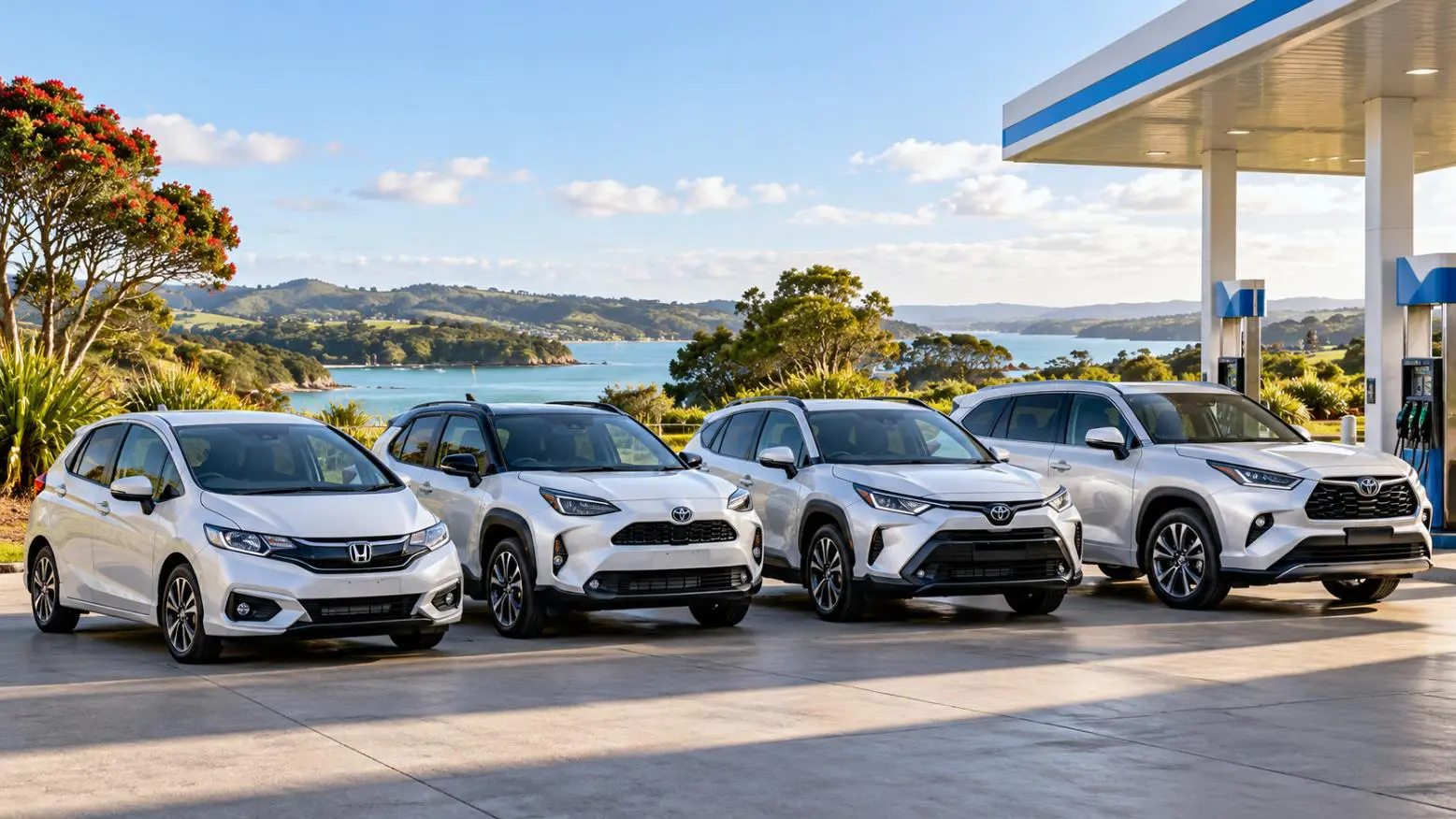
Check cars & availabilityBlue Star hybrid vehicles compared
The premium compact and Yaris Cross planning estimates below were updated on 4 November 2026 using the higher figures of 3.3 and 3.8 L/100 km respectively. Capacity is the stated maximum, not a promise of comfortable luggage space with every seat occupied. Vehicle allocation and availability must be confirmed through booking.

Compact
Honda Jazz Hybrid
3.3 L/100 km
Passengers: Up to 5.
Suits: Couples or a small group travelling light.
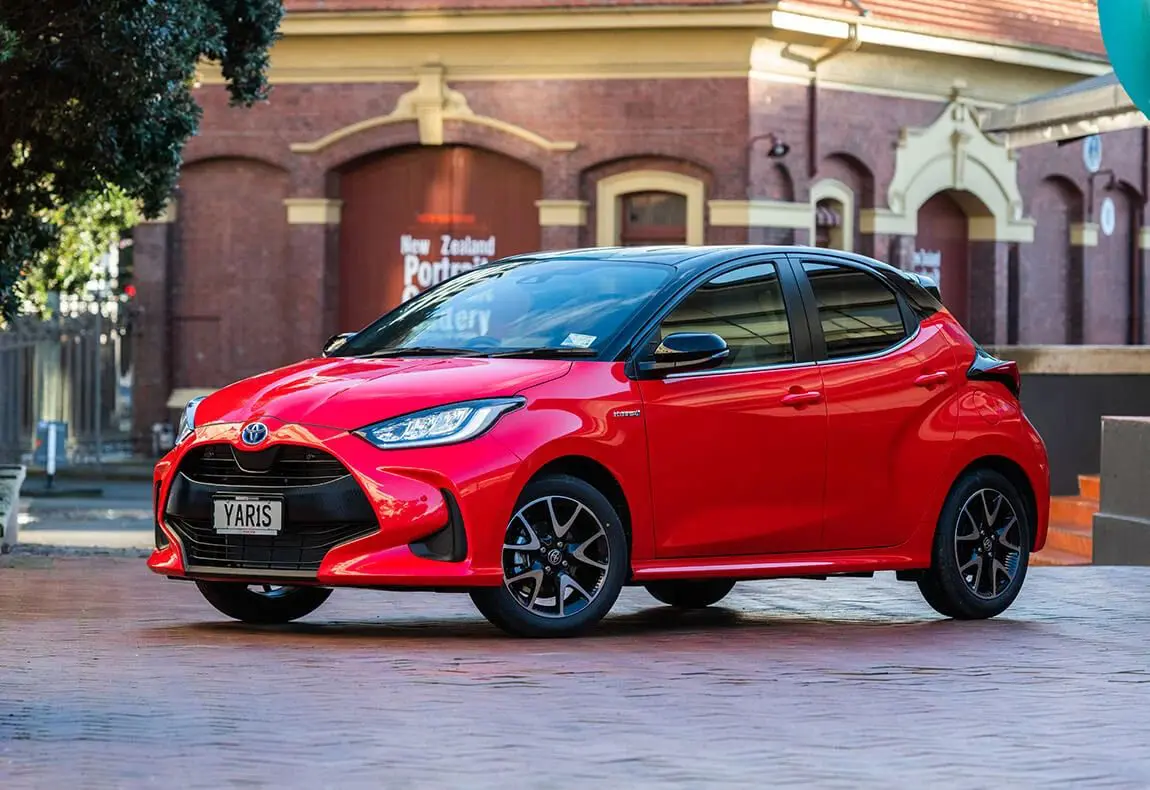
Premium compact
Toyota Yaris / Honda Jazz
3.3 L/100 km
Passengers: Up to 5.
Suits: Travellers wanting a newer compact category.

Medium SUV
Toyota Yaris Cross Hybrid
3.8 L/100 km
Passengers: 5.
Suits: Small families comparing SUV layouts.
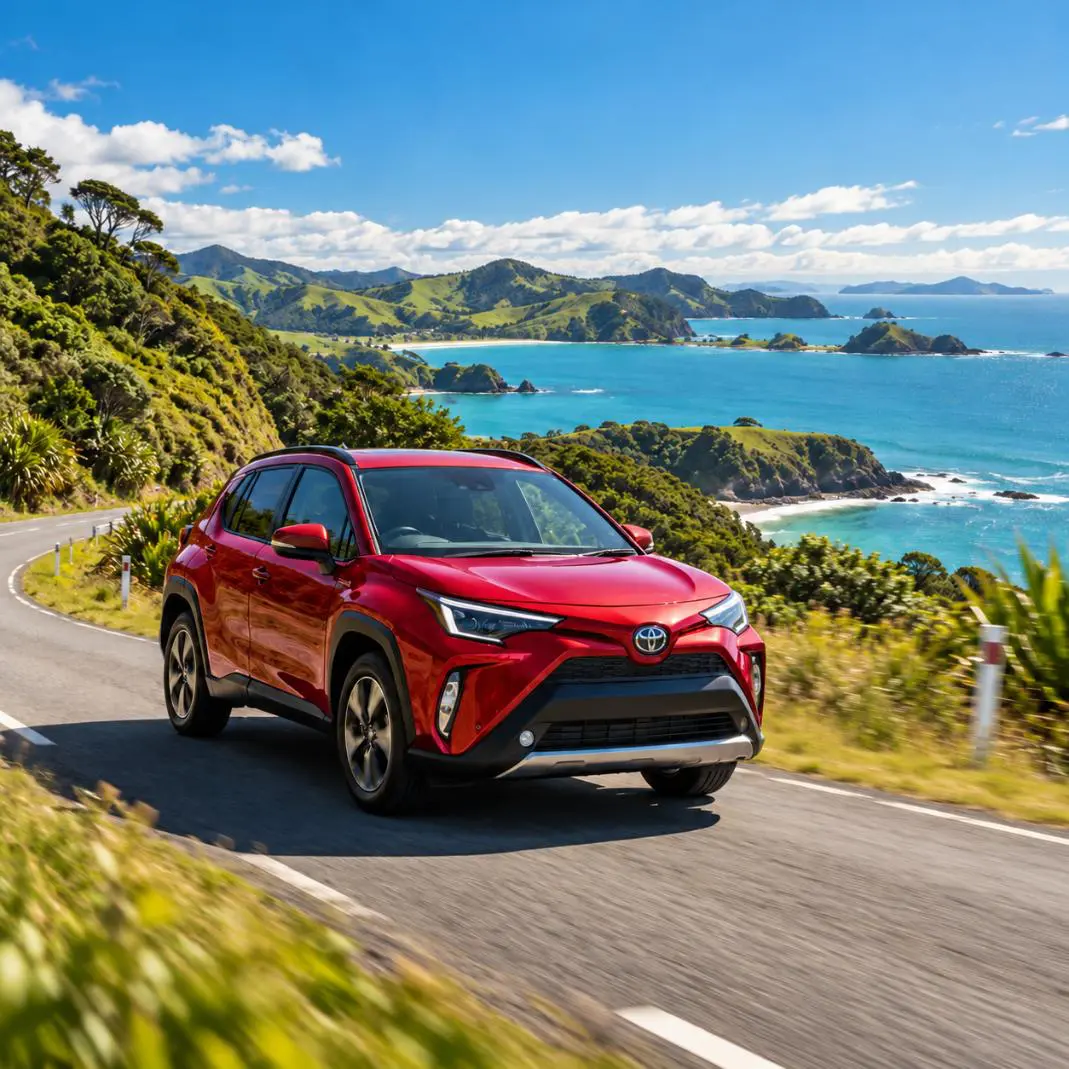
Medium SUV
Toyota Corolla Cross Hybrid
4.1 L/100 km
Passengers: 5.
Suits: Families and touring travellers.
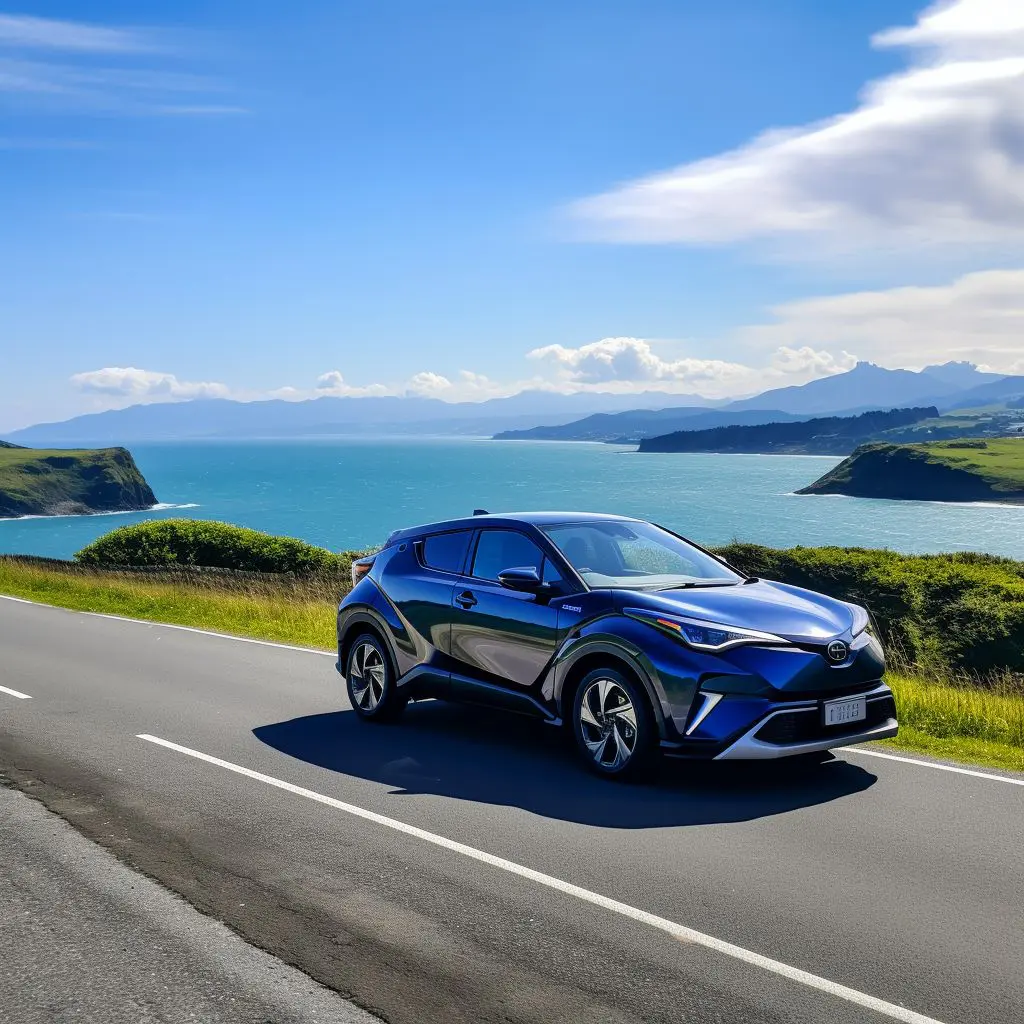
Medium SUV
Toyota C-HR Hybrid
4.8 L/100 km
Passengers: 5.
Suits: Couples or small groups wanting an SUV.

Large SUV / 7-seater
Toyota Highlander Hybrid
5.6 L/100 km
Passengers: Up to 7.
Suits: Larger families and groups; confirm luggage space.
Choosing the right size: a Honda Jazz or premium compact can suit a couple or small family with modest luggage. A medium SUV can suit travellers wanting a different seating position and room layout. For six or seven travellers, ask about the Highlander and confirm bag space and child-seat requirements before booking. The Highlander listing recommends soft luggage when all seven seats are in use.
The Corolla Cross figure of 4.1 L/100 km comes from the live medium-SUV page; it is absent from the comparison range listing. This is a site-published figure, not an independently verified specification for every model year.
Estimate your petrol use and cost
Enter your total driving distance, the petrol price you expect to pay and a hybrid model below. The calculator uses this guide’s L/100 km planning estimate, including 3.3 for the premium compact and 3.8 for the Yaris Cross SUV; it does not predict weather, traffic or driving style.
Formula: fuel used = distance × (L/100 km) ÷ 100. Estimated cost = fuel used × petrol price. Results cover petrol only and exclude hire charges, ferries, parking and other travel costs. Budget extra for detours and higher real-world consumption.
How much petrol will a Northland road trip use?
Start with the entire journey, including your return drive. Then add the beach turn-offs, accommodation transfers and small errands that are easy to overlook. Our scenic-drive guide can help you decide the kind of day you want before building a fuel budget.
| Total distance | Estimated litres | Estimated petrol cost |
|---|---|---|
| 100 km | 4.10 L | NZ$14.35 |
| 300 km | 12.30 L | NZ$43.05 |
| 500 km | 20.50 L | NZ$71.75 |
These are distance scenarios, not measured fuel use for a particular route. If your actual average were 5.0 L/100 km, that same 300 km would use 15 litres and cost NZ$52.50 at the example price. The difference shows why a little budget flexibility helps.
Use less fuel without turning driving into a challenge
- Leave enough time. A relaxed plan reduces the temptation to accelerate hard between stops.
- Look ahead and brake progressively. Maintain safe following distances and respond early to traffic.
- Combine short errands. A single outing may be more practical than repeated cold starts.
- Carry what you need. Avoid unnecessary weight and use the recommended tyre pressures.
- Use the climate controls sensibly. Keep windows clear and occupants comfortable; do not compromise visibility to save fuel.
- Compare fuel prices before remote stretches. Never run the tank low in pursuit of a cheaper stop.
Read Blue Star’s existing fuel-saving article for more trip-planning ideas, and check the rental FAQs for the fuel-return policy that applies to your booking.
Your questions answered
Which Blue Star hybrid uses the least petrol?
The compact and premium compact categories use a planning estimate of 3.3 L/100 km in this guide. Actual fuel use depends on the supplied model and driving conditions, so choose a vehicle that also suits your passengers and luggage.
Is the published L/100 km guaranteed?
No. Published figures are planning references. Model specification, test method, road conditions, load and driving style affect real-world use.
What fuel estimate does the calculator use for the Yaris Cross?
The calculator uses 3.8 L/100 km for the Toyota Yaris Cross SUV, the higher planning estimate selected for this guide. Actual consumption can vary with the vehicle, route, load and driving style.
Does the calculator include the rental price?
No. It estimates litres and petrol cost only. Use Blue Star’s booking page for live rental availability and pricing.
Do I also pay to charge the hybrid?
Blue Star’s conventional self-charging hybrids do not require external charging. You still pay for petrol under the fuel arrangements in your rental agreement.
More about booking and driving with us: Blue Star rental FAQs.
Keep exploring Northland



Spend Less on Petrol, More on Your Northland Adventure
Choose the car that suits your passengers and luggage, then compare live hire availability. Our hybrid range helps you weigh up size and published fuel figures together.
Choose your dates belowAvailability, pickup arrangements and rental conditions are confirmed with your booking.
Check cars & availability
Choose your collection point and travel dates to see the available cars.
Open the booking page if you prefer.
Fuel-planning estimates updated 4 November 2026. Travel conditions, operator arrangements and fleet listings can change. Follow current official advice.